







What Are the Main Differences Between Attic Stairs and Attic Ladders? Posted by Best Access Doors Canada on 14th Aug 2024
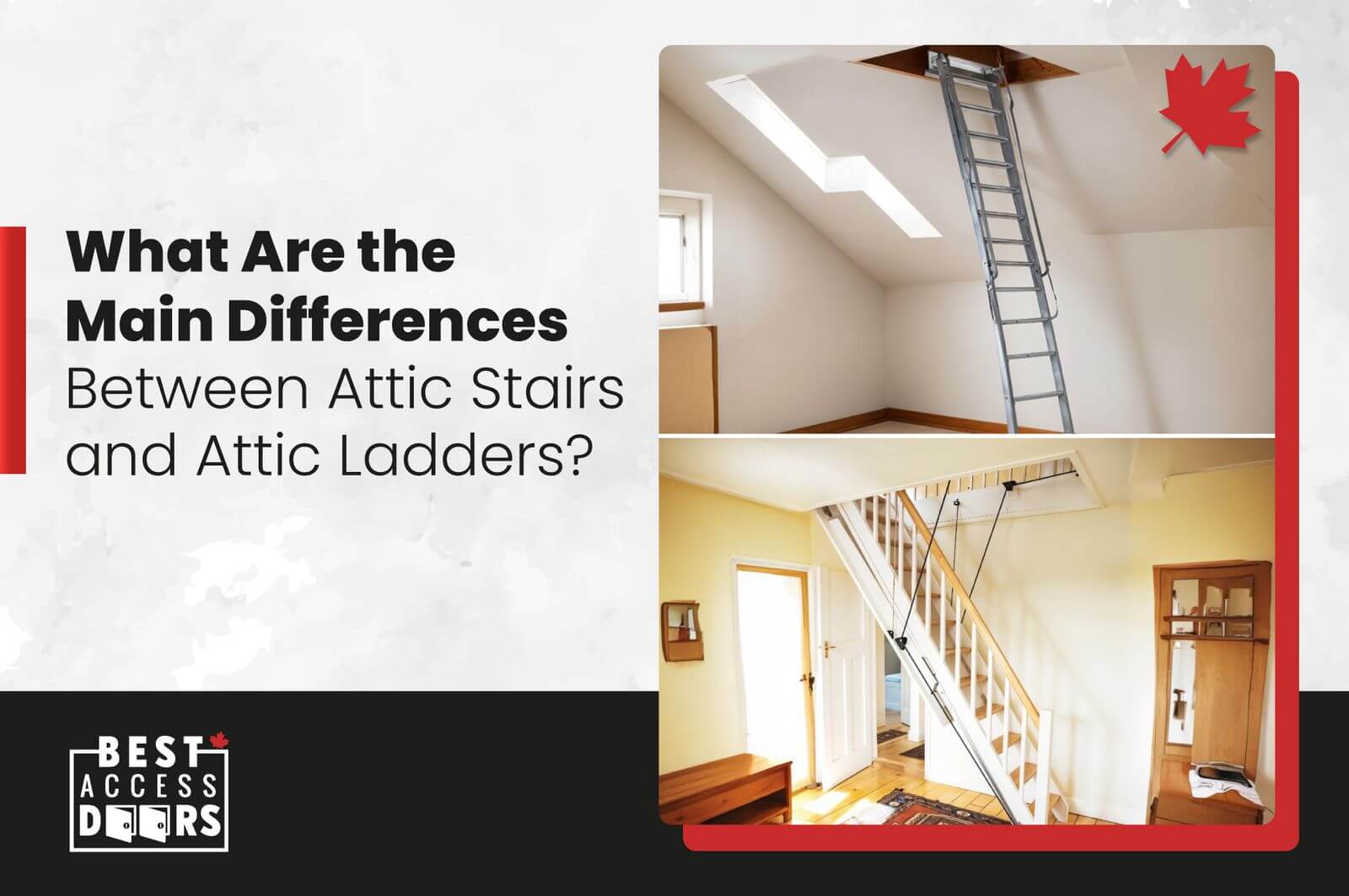
The main differences between attic stairs and attic ladders lie in their design, weight capacity, ease of use, and intended application, with stairs offering more comfort and stability. In contrast, attic ladders provide a more compact and space-saving access solution.
Each option addresses different needs and preferences, making it necessary to consider the specific requirements of the attic and the intended usage.
In this article, we'll discuss the differences between attic stairs and ladders, helping you choose the right solution based on project requirements.
What Makes Attic Stairs Different From Attic Ladders?
Attic Stairs
Attic stairs are permanent, fixed installations that resemble a traditional staircase. They are integrated into the house structure, offering a robust, durable solution for frequent access.
Attic Ladders
Attic ladders are retractable or foldable ladders mounted on the attic hatch. Made from various materials like metal, they are designed to be pulled down when needed and stowed away when unused. This makes them an excellent space-saving option, particularly for areas with limited space.
Request a quote today to help you select the ideal attic ladder for your project. We also provide custom access solutions tailored to fit your space, safety needs, and building codes.
What Are the Pros and Cons of Attic Stairs and Attic Ladders?
Attic Stairs
Pros:
- Stable and Safe: Fixed installations offer a reliable and safe access point, minimizing the potential for mishaps. Their stability and secure design contribute to a safer working area, reducing the likelihood of accidents.
- Ease of Use: Fixed installations are permanently set up and ready for immediate use, preventing the need for assembly or adjustments. This constant accessibility saves time and ensures a prompt response in critical situations.
- Aesthetic Integration: Attic stairs can be customized to blend seamlessly with the space's décor, enhancing its aesthetic appeal. This integration ensures they complement the interior design rather than detract from it.
- Cons:
- Space Requirements: They require a designated area for installation, making them less ideal for limited spaces. Their permanent placement can pose challenges in compact environments where space optimization is a priority.
- Higher Cost: Attic stairs can be costly due to the intricate installation process and potential structural modifications. This can add a huge expense to the overall cost.
- Permanent Fixture: Attic stairs are fixtures that cannot be easily moved or removed once installed. This lack of flexibility makes it crucial to consider the chosen location carefully before installation.
Attic Ladders
Pros
- Space-Saving: Attic ladders fold away when unused, freeing up valuable floor space. This space-saving feature makes them a practical and appealing option for smaller areas with limited room.
- Cost-Effective: Retractable installations are typically more budget-friendly and simpler to install than fixed options. Their user-friendly design makes them suitable for DIY projects, saving on professional installation costs.
- Flexible: Attic ladders offer flexibility in placement and can be neatly stowed away when not in use, preserving the space's visual appeal. Their discreet storage ensures they don't disrupt the area's overall aesthetics.
- Safe: Although attic ladders are sometimes viewed as less secure than traditional stairs, this is often a misconception. Many high-quality attic ladders prioritize safety, typically featuring robust metal construction, anti-slip treads, sturdy handrails, and secure locking mechanisms.
Many solutions ensure a safe and stable ascent and descent, making them a reliable option for attic access. For example, the BAC-LME up to 8'11" insulated metal attic ladder comes equipped with non-slip steps, handrails on both sides and a weight capacity of up to 350 pounds, demonstrating the safety and reliability of modern attic ladder designs.
The peripheral gasketing within its interior not only minimizes drafts and keeps out dust and debris but also protects against harsh elements, helping to ensure the ladder remains in good condition.
Cons
- Less Stable: As said, attic ladders may not be as stable as fixed stairs, especially if not installed properly. This can make them more prone to movement, highlighting the importance of installation.
- Requires Effort: Attic ladders involve manual extension and retraction, which could pose difficulties for frequent users. The repetitive motion of pulling down and pushing up the ladder can become challenging for some individuals.
How Do You Choose the Right Access Solution?
Comparing attic stairs vs. attic ladders can help determine the best solution for a space. Before purchasing, weigh several factors to guarantee you choose the most suitable solution.
Here are some of them:
Space Constraints
The available space significantly influences your access choice. Attic stairs typically require more floor space for installation and use, making them less ideal for smaller rooms. In contrast, attic ladders offer a space-saving solution, preserving floor area with their compact and retractable design while providing convenient access.
Frequency of Use
Beyond space considerations, understanding the frequency of use of the attic access is crucial. Regular access from a single, designated point may benefit from attic stairs' superior safety and comfort. When flexibility and access from multiple locations are necessary, attic ladders provide unmatched versatility and portability.
Budget
Budget matters in any improvement project, and choosing the right materials for attic access solutions is no exception. While some may assume that attic stairs are always the pricier option, cost-effectiveness depends on individual needs and usage patterns.
For individuals seeking a practical and budget-friendly solution, especially for infrequent or multi-purpose attic access, attic ladders can be a surprisingly economical choice that doesn't compromise functionality. While a potentially larger initial investment, attic stairs can provide long-term value and convenience.
Frequently Asked Questions on Attic Stairs and Ladders
1. What are attic stairs best used for?
Attic stairs are best suited for frequent attic access, offering greater comfort, stability, and higher weight capacity than ladders.
2. Are attic stairs safe for regular use?
Yes, attic stairs are designed with wider steps, handrails, and sturdy construction, making them safe for repeated and everyday use.
3. When should attic ladders be used instead of stairs?
Attic ladders are ideal for limited spaces or occasional attic access where a compact, space-saving solution is required.
4. Do attic ladders support heavy loads?
Most attic ladders are designed to handle standard loads, but weight capacity varies by model and should be checked to ensure safe use.
To Sum Up
Choosing between attic stairs and ladders ultimately depends on the project requirements and priorities. Both options offer unique advantages, and the right choice will undoubtedly enhance the functionality and value of buildings.
At Best Access Doors Canada, we understand the importance of convenient and reliable attic access. We also recognize that attic ladders are a practical and cost-effective solution for many, offering ease of use and versatility. With that, our attic ladders are high-quality and designed for durability, safety, and convenience.
Call us at +1-888-327-5471, and our team will assist you in selecting the solution that best meets your needs.