




How Contractors Can Save Hours & Reduce Energy Waste with Crawl Space Access Doors Posted by Best Access Doors Canada on 23rd Apr 2026
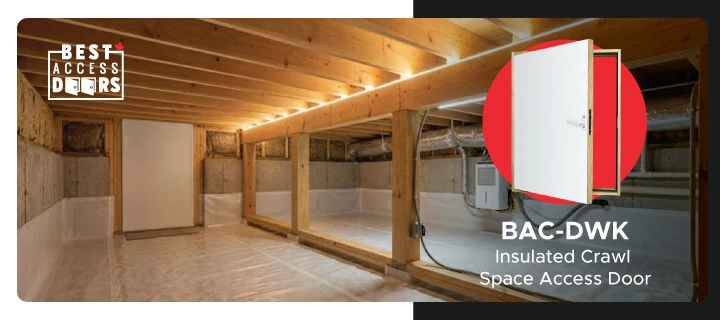
Contractors save hours and slash energy waste by replacing site-built hatches with prefabricated, insulated crawl space access doors. These guarantee a high-performance seal in a fraction of the time required for installation.
Makeshift covers waste billable hours, warp with time, leak air, and trigger failed inspections. On the contrary, specialized solutions like the BAC-DWK access door maintain thermal envelope continuity from the start.
In the demanding Canadian climate, a gap in the foundation is a direct path for heat loss and moisture intrusion. This article explores how specifying the right crawl space access doors in Canada eliminates these thermal weak points while simplifying on-site workflow.
Why Do Crawl Space Access Doors Affect Both Labour Time and Energy Performance?
A crawl space access door impacts labour and energy because it serves as an intentional breach in the building's thermal envelope. These access doors need to be gasketed and insulated.
Otherwise, they create a "chimney effect" that pulls cold air into the structure, forcing HVAC systems to work harder. For contractors, a low-quality door disrupts installation sequencing and forces time-consuming site-built fixes. Visible gaps delay inspections and put approvals at risk.
In contrast, a high-quality, energy-efficient crawl space access door protects thermal envelope continuity from day one. It blocks heat loss and moisture migration, prevents long-term structural damage, and eliminates the costly rework that eats into project margins.
The High Cost of the ‘Quick Fix’
When a crew spends two hours on-site framing a custom plywood hatch, they aren't just losing time; they are creating a liability. Site-built doors rarely meet the strict air leakage control requirements of modern Canadian building codes. This leads to:
- Drafts and cold floors resulting in homeowner complaints.
- Heat loss increasing the building's lifecycle energy efficiency costs.
- Moisture migration, allowing humid air to condense on cold rim joists.
- Poor fit leading to inspection failures and rework
- Callbacks if the door warps.
Stop wasting billable hours on site-built hatches. If you are tired of makeshift panels that leak air and compromise your build, it's time to upgrade your hardware. Explore our full range of crawl space access doors in Canada to find the perfect fit for your next project.
How Does Improper Sealing Lead to Energy Waste in Canadian Climates?
Poorly sealed access doors waste energy by letting unconditioned air slip past the building's insulation—an issue made worse by Canada's extreme temperature swings.
In cold climates, warm air rises and escapes through the roof. This creates a pressure difference that pulls cold air in through any gaps in the crawl space. Without insulated crawl space doors, these access points become massive thermal leaks.
This doesn't just increase utility bills; it introduces moisture that can compromise the Canadian building envelope, leading to mold risks and wood rot in the floor joists.
Air Leakage in Heating-Dominant Regions
In most of Canada, homes are heated through long, cold winters, keeping indoor temperatures around 20°C or higher. Crawl spaces and surrounding soil are not actively heated, so they stay much colder—often close to outdoor temperatures. That's why the interior of a home is significantly warmer than the crawl space or exterior ground.
This temperature difference creates a pressure vacuum. If you have a standard, non-gasketed door, the house sucks in cold, damp air.
Because crawl spaces are pressure-sensitive zones, even a small 1/8-inch gap around an access door can move significant volumes of unconditioned air every day. Air-sealed access doors are the only way to counteract this pressure-driven energy loss.
Moisture Management and Freeze-Thaw Cycles
Canada's freeze-thaw cycles are brutal on below-grade components. When warm, moist air from the home meets the cold surface of an uninsulated access panel, condensation forms. Over time, this moisture:
- Degrades fiberglass or mineral wool insulation nearby.
- Creates a breeding ground for mold, increasing contractor liability.
- Causes wooden framing members to swell and eventually rot.
Using weather-resistant construction materials, such as those found in the BAC-DWK, ensures the door remains functional and sealed despite these environmental stresses.
Studies of air leakage in building envelopes show that junctions and penetrations — including access doors — tend to be among the common pathways for unintended airflow. Insulated access doors support air barrier continuity, keeping the heat where it belongs.
Related: Concrete or Plastic: Which Material Works Best for Sealing a Crawl Space?
What Features Make Crawl Space Access Doors Easier to Install and Inspect?
The best crawl space access doors feature sturdy frames, gasketed seals, and insulated cores. These eliminate the need for manual on-site modifications.
By using a door designed for energy-efficient crawl space access, contractors can skip the time-consuming process of cutting rigid foam to fit a hatch or weather-stripping a wooden frame.
These access doors provide out-of-the-box inspection readiness because they meet specific R-value and air-sealing requirements. They also ensure a clean, professional finish that building inspectors recognize as code-compliant.
Insulated Core Construction
A door with a built-in insulated core ensures thermal envelope continuity. Think mineral wool or fiberglass-insulated cores. In many jurisdictions keen on energy efficiency, an uninsulated door can be a code violation.
Access doors like the BAC-DWK come with internal insulation, saving the contractor from DIY fixes that rarely pass a professional inspection.
Gasketed/Weather-Resistant Design
Sealed access doors rely on high-quality gaskets. A perimeter seal acts as the final line of defense against air infiltration.
For below-grade access, these gaskets must withstand moisture without losing elasticity. The durability ensures the seal will prevent drafts for years to come.
Prefabricated Framing and Flange Design
A prefabricated flange allows the door to be mounted quickly to the foundation or framing. This simplifies installation sequencing, allowing the exterior finish or interior insulation to be completed around a fixed, known dimension rather than a moving target.
Related: Why Insulated Access Doors and Panels Are a Must for Canadian Winters
How Do BAC-DWK and BAC-ATWT Support Efficient and Energy-Aware Builds?
The BAC-DWK and BAC-ATWT support efficient builds by providing high-performance barriers that prevent air infiltration and thermal loss at critical access points.
BAC-DWK Insulated Crawl Space Access Door
The BAC-DWK access door provides airtight and thermally efficient access to roof eaves and crawl spaces. Here's how this panel supports efficient and energy-aware builds.
- Superior Thermal Insulation: Features an insulated door leaf that drastically limits heat loss, keeping unconditioned air from bleeding into living spaces.
- Draft Prevention: Integrated gaskets create a continuous perimeter seal that helps reduce air leakage from stack effect pressures and limits the intrusion of exterior air and moisture.
- Adaptive Dutch Door Design: The versatile hinge system allows the door to swing left or right, making it suitable for tight job-site configurations.
- Architectural Integration: The unique L-shaped frame blends seamlessly into the structure, providing a clean, professional finish for maintenance access points.
BAC-ATWT Airtight and Watertight Flush Access Door
For projects that demand tighter air control, the BAC-ATWT access panel features a specialized seal that helps block unconditioned air and contaminants from entering the building envelope.
Its flush-mounted design supports consistent environmental conditions while providing energy-efficient crawl space access.
- Airtight & Watertight Seal: Engineered to prevent air and moisture from compromising sensitive interior processes or the thermal barrier.
- Heavy-Duty Construction: Built from durable steel to withstand demanding commercial conditions and repeated use without losing seal integrity.
- Contamination Control: Designed for labs and hospitals, its performance translates perfectly to high-performance residential and commercial envelopes.
- Seamless Aesthetic: The flush-to-surface design ensures the door blends into walls or ceilings, maintaining a clean look while providing rugged below-grade access performance.
Don't let a thermal bridge undermine your blower door test. Ensure your project is inspection-ready with a door that actually holds a seal. Request a quote for the BAC-DWK or BAC-ATWT today and maintain your building's thermal envelope continuity.
FAQs about Professional Crawl Space Access
1. How do I stop a crawl space door from ‘sweating’ in the winter?
Condensation, or "sweating," occurs when warm, moist indoor air hits the cold surface of an uninsulated door. To stop this, install an insulated crawl space door, such as the BAC-DWK. Its thermal core prevents the interior face from reaching the dew point, keeping the unit dry and preventing mold growth on the surrounding framing.
2. What is the minimum R-value for a crawl space hatch in Canada?
While specific requirements vary by province (Ontario, BC, or Alberta) and climate zone, most Canadian building codes require the access hatch to provide thermal resistance nearly equivalent to the surrounding wall or floor assembly. Using a pre-insulated door ensures you meet these energy-efficient crawl space access standards and avoid "red flags" during a blower door test.
3. Can I use a standard attic hatch for a crawl space, or will it rust?
Standard interior attic hatches are rarely built for the high-humidity, below-grade environment of a crawl space. Without a moisture-resistant finish and heavy-duty gaskets, they will quickly rust or warp. For below-grade access, always specify a weather-resistant construction model to ensure lifecycle durability.
Wrap Up
Specifying the right crawl space access doors in Canada is about more than just filling a hole in the foundation. It is about labour efficiency, reducing the risk of callbacks, and ensuring that the building performs as designed for decades.
By choosing insulated, air-sealed solutions like the BAC-DWK and BAC-ATWT, you ensure inspection confidence and provide your clients with an energy-efficient home.
Stop letting a leaky hatch cause frozen subfloors that frustrate tenants. Our team can help you specify the right insulated crawl space doors to fight the stack effect and protect your bottom line. Contact us or call +1-888-327-5471 today to coordinate a solution that saves you time and energy.