





What Are the Top 5 Features That Make Access Panels Winter-Ready in Canada? Posted by Best Access Doors Canada on 16th Jan 2026
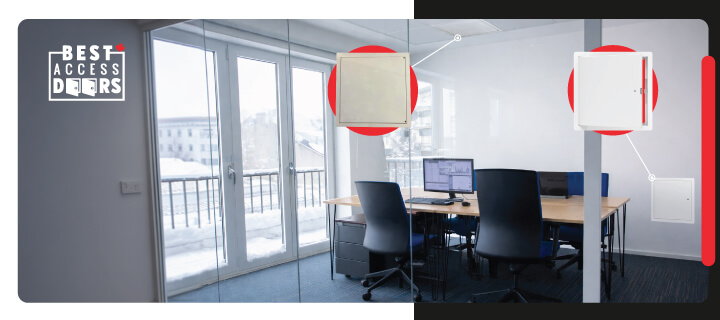
The top five features that make access panels winter-ready in Canada include continuous insulation, airtight sealing, condensation control, cold-climate durability, and consistent closure and fit.
When integrated effectively, they work together to reduce heat transfer, limit air movement, and manage moisture at the access opening. Many products on the market, including the BAC-ATWT Airtight & Watertight Flush Access Door and BAC-DSD Draft Stop Access Panel, demonstrate how this combination of design elements can support reliable performance in cold-weather conditions.
In this article, we’ll discuss the features that define a winter-ready access panel and explain how they contribute to dependable performance in Canadian climates.
What Makes an Access Panel Truly Winter-Ready for Canadian Construction?
A truly winter-ready access panel is defined by a combination of factors that allow it to perform reliably under prolonged cold exposure without compromising thermal, air, or moisture control.
Rather than relying on a single component, winter readiness depends on how multiple construction elements work together at the access opening. As mentioned, these five features distinguish access panels for Canadian winters:
1. Continuous Insulation
Insulated cores and thermal separation within the panel assembly improve thermal performance in many commercial access panels in cold climates by reducing localized heat loss.
2. Airtight Sealing Systems
Integrated gaskets and tight tolerances restrict unintended air movement, helping stabilize interior conditions during temperature and pressure fluctuations.
3. Condensation Control Design
Design strategies that limit surface cooling and air exchange reduce the likelihood of moisture forming within adjacent wall and ceiling assemblies.
4. Cold-Climate–Durable Materials
Materials selected for winter-ready access panels remain dimensionally stable and functional even after extended exposure to low temperatures and seasonal freeze-thaw cycles.
5. Consistent Closure and Fit
Precision fabrication and dependable latching help ensure the panel closes securely after repeated access, preserving performance over time.
Ready to learn which winter-ready access panels help protect your building performance in Canadian climates? Contact us to find more about our insulated access solutions designed for cold-weather applications.
How Does Insulation in Access Panels Reduce Heat Loss and Condensation?
Insulation reduces heat loss and condensation by creating a thermal buffer at the access opening, which slows the movement of energy between conditioned and unconditioned spaces. In winter-ready access panels, this added resistance helps regulate the flow of heat through the panel assembly, preventing it from escaping through exposed metal surfaces.
Controlling heat flow also affects how moisture behaves within wall and ceiling systems. Slower energy transfer reduces rapid surface cooling, which limits vapour phase change inside the assembly. This is especially important in cold climates where interior humidity can migrate toward colder surfaces during winter operation.
Related: What Are Access Doors and Why Are They Important in Canadian Commercial Construction?
Which Materials Perform Best in Freeze–Thaw Conditions for Access Panels?
Steel, aluminum, galvanized steel, and insulated drywall panels perform best for access panels in Canada’s freeze–thaw conditions because they remain dimensionally stable and resist moisture-related deterioration. dimensionally stable and resist moisture-related deterioration.
Canadian winters are characterized by frequent temperature fluctuations around the freezing point, which impact how materials expand and contract, as well as their interaction with moisture over time. Selecting materials that respond predictably to these conditions is essential for long-term performance.
Each material contributes distinct benefits in freeze–thaw environments:
- Steel access panels offer consistent structural rigidity, ensuring stability even during repeated temperature fluctuations.
- Aluminum access panels resist corrosion and maintain dimensional accuracy in environments exposed to moisture.
- Galvanized or powder-coated steel panels add an extra layer of protection against surface degradation caused by condensation.
- Insulated drywall access panels offer a combination of thermal resistance and surface continuity for interior applications when properly sealed.
How Should Contractors Choose the Right Winter-Ready Access Panel for Each Application?
Contractors should select winter-ready access panels based on installation location, environmental exposure, access frequency, and required thermal and air control performance.
Choosing the right access panel begins with understanding how each access point functions within the overall wall or ceiling assembly. Performance requirements, such as air control, moisture resistance, and environmental separation, play a critical role in selecting the proper panel.
Evaluate the Installation Environment
The installation environment is the primary factor in determining which access panel is appropriate. Panels installed in exterior walls, roof assemblies, or unconditioned spaces must provide significantly higher resistance to air and moisture infiltration than those used in interior partitions.
Additionally, spaces that support sensitive or regulated operations require consistent environmental separation to maintain performance and compliance.
The BAC-ATWT Airtight & Watertight Flush Access Door is specifically designed for applications where strict control of air and moisture is essential. Its airtight and watertight construction helps preserve controlled interior conditions while still allowing necessary access for inspection, maintenance, or service.
BAC-ATWT Key Characteristics:
- Airtight and watertight sealing system engineered to minimize air leakage and moisture intrusion, supporting stable environmental conditions.
- Flush-mounted design that integrates seamlessly into finished walls and ceilings, delivering a clean, professional appearance without disrupting architectural aesthetics.
- Heavy-duty steel construction built for durability and long-term performance in demanding environments that require strength, reliability, and frequent access.
Consider Airflow and Draft Control Requirements
In cold climates, uncontrolled air movement at access points can contribute to heat loss and condensation. That said, those installed between conditioned and unconditioned spaces should include thermal access panel features that promote consistent closure and effective airflow control to help maintain thermal performance.
The BAC-DSD Draft Stop Access Panel is well-suited for these applications, addressing draft-related concerns through durable construction and reliable closure mechanisms that help limit unintended air transfer.
BAC-DSD Key Benefits:
- Cold-rolled steel construction that provides strength, rigidity, and long-term durability, making the panel suitable for demanding building environments.
- Self-closing and self-latching door mechanism designed to support effective draft control by ensuring the panel returns to a fully closed position after each use.
- Continuous hinge design that allows smooth operation while supporting long service life, even in applications requiring frequent access.
- Two-way access configuration that offers installation flexibility and accommodates a wider range of wall and ceiling conditions.
- Exposed flange that simplifies installation in both masonry and gypsum drywall assemblies, reducing labour time while ensuring a secure fit.
Request a quote for the BAC-ATWT and BAC-DSD, and receive expert assistance with sizing, installation considerations, and winter performance requirements before finalizing your selection. We provide custom access solutions and can also discuss how these models can be tailored to your specific application.
Frequently Asked Questions on Winter-Ready Access Panels
1. What makes an access panel ‘winter-ready’ or insulated?
A winter-ready access panel is designed to reduce heat loss and limit air infiltration in cold-weather conditions. These panels typically incorporate insulated cores, tighter sealing systems, or draft-control features that help maintain consistent indoor temperatures.
By minimizing uncontrolled airflow and condensation, winter-ready panels support energy efficiency and help protect wall and ceiling assemblies from moisture-related damage.
2. How do winter-ready access panels differ from standard panels?
Standard access panels primarily provide access and basic coverage, with limited consideration for thermal or airflow performance. Winter-ready access panels, by contrast, are engineered to perform as part of the building envelope.
They often include enhanced gaskets, self-closing or self-latching mechanisms, insulated materials, or airtight construction to better manage drafts, heat transfer, and moisture intrusion in cold or transitional climates.
3. Are insulated access panels in Canada available in custom sizes or finishes?
Yes. Many insulated access panels in Canada are available in custom sizes to accommodate unique openings or project-specific requirements. Finish options may also be offered to match surrounding wall or ceiling surfaces, supporting both functional performance and architectural consistency. The availability of customization can vary by model, so it is best to review the product specifications or consult with the manufacturer for project-specific options.
To Sum It Up
Knowing the right features that make access panels winter-ready in Canada is essential to achieving reliable cold-weather performance across all building types. Confirming that each panel aligns with the project’s application, exposure conditions, and winter-performance requirements helps reduce long-term risks related to heat loss, air leakage, and moisture.
At Best Access Doors Canada, we support contractors, designers, and builders by guiding them through the selection of access panels based on application fit and cold-climate performance considerations. Our team works closely with project requirements to help identify solutions that balance durability, functionality, and practicality during installation.
Contact us at +1-888-327-5471, and we’ll help you review your options and finalize the right access panel for your project.