





What Are the Most Important Museum Design Considerations in Terms of Scalability? Posted by Best Access Doors Canada on 10th Jul 2024
The most important museum design considerations in terms of scalability are flexibility, modular planning, future expansion readiness, adaptable building systems, and efficient visitor circulation.
Scalable museum design is the art of creating flexible and adaptable spaces that can accommodate future growth, changing needs, and evolving museum practices. This article will provide architects, museum curators, commercial construction managers, and developers with insights into achieving this critical design objective.
What Are the Critical Aspects of Scalable Museum Design?
Flexible Infrastructure
The foundation of a scalable museum lies in its infrastructure. Employing modular museum design principles allows for easy reconfiguration of galleries, storage spaces, and support areas.
You can achieve this through:
- Movable walls and partitions: These enable the creation of temporary exhibition spaces or flexible event areas within the museum.
- Adaptable mechanical, electrical, and plumbing (MEP) systems: This ensures that the infrastructure can accommodate changing demands for power, lighting, and climate control as the museum expands or adapts its programs. It highlights the need for access solutions like access panels to make maintenance and upgrades easier while keeping utility systems safe and secure.
- Future-proofing for technology integration: Museums increasingly utilize digital tools and technologies for interactive exhibits, collection management, and visitor engagement. Scalable design should consider integrating these technologies by incorporating appropriate infrastructure and anticipating future technological advancements.
Future-Proof Museum Infrastructure
The building envelope, encompassing the walls, roof, and windows, is crucial for future expansion.
- Structural systems designed for expansion: The building's structural system should be able to handle the additional weight and loads associated with future additions, especially if you decide to go vertical. Provisions for adding new entrances, windows, and skylights: The strategic placement of blank walls and reinforced areas allows for creating new access points and introducing natural light as the museum expands.
- Sustainable and adaptable materials: Choosing durable and adaptable materials for the building envelope ensures long-term functionality and facilitates future modifications.
Strategic Use of Space
Maximizing the use of space is essential for designing a scalable museum. This involves:
- Multi-functional spaces: Designing spaces that can serve multiple purposes—such as galleries that can also be used for educational programs or events—increases flexibility and optimizes space utilization.
- Mobile walls and partitions: As mentioned earlier, movable walls and partitions enable the quick transformation of spaces and the creation of various layouts as needed.
- Accessibility and inclusivity: Scalable design should consider the needs of all visitors by ensuring that all spaces are accessible and inclusive, regardless of a person's physical ability.
Collection Management and Storage
A museum's collection is its lifeblood, and its storage needs to be scalable to accommodate future acquisitions. This can be achieved through:
- Scalable storage solutions: Utilizing modular storage systems, such as movable shelving and compact storage units, allows for efficient expansion as the collection grows. You may also integrate hidden rooms in certain areas as storage rooms with entry points concealed by access doors and panels installed flush on your walls, rendering them virtually invisible to visitors and guests.
- Climate-controlled environments: Maintaining optimal temperature and humidity levels is crucial for preserving diverse collections. A scalable design should integrate expandable climate control systems to accommodate additional storage spaces.
- Collection management systems: Implementing robust collection management systems enables efficient access, retrieval, and tracking of items, particularly as the collection expands. In addition to the above considerations, it's crucial to prioritize fire efficiency in scalable museum design.
Fire-rated insulated access doors are essential to compartmentalizing spaces and slowing down the spread of fire within the museum. These doors can withstand fire for a certain period, giving occupants time to evacuate and firefighters to respond.
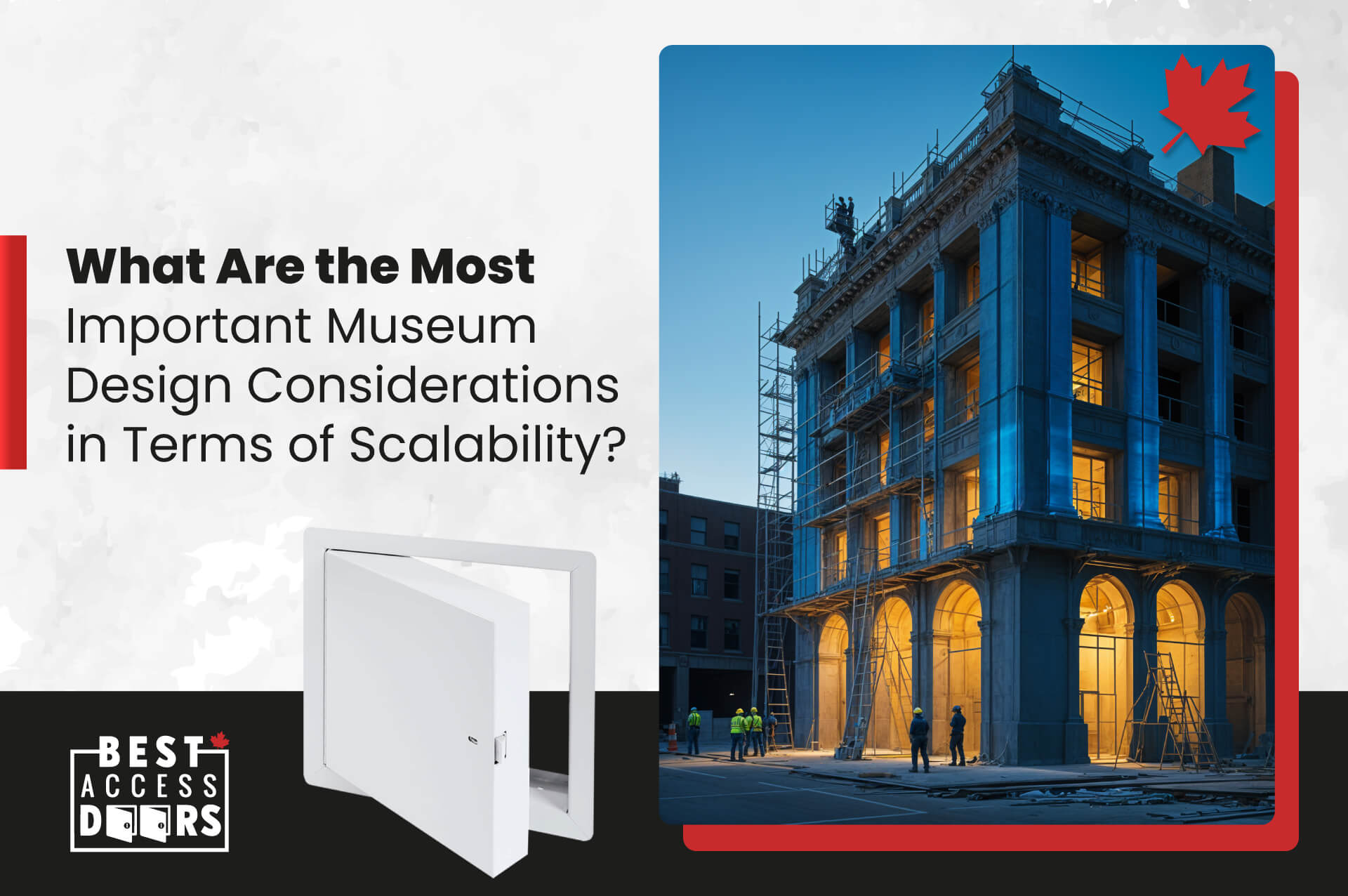
Best Access Doors Canada partners with North America's largest access solutions provider, including fire-rated insulated access doors, like the BAC-PFI Fire-Rated Insulated Access Door with Flange.
To learn more about our products, check out customer reviews here.
How Do You Plan for Museum Expansion?
Effective master planning is essential for successful museum expansion. This involves:
- Developing a long-term vision: Defining the museum's future goals and aspirations helps guide the design and planning process for potential expansions.
- Identifying potential expansion areas: Analyzing the existing site and surrounding context allows for identifying suitable areas for future growth.
- Phased construction: Breaking down the expansion into manageable phases allows for budget allocation and operational continuity.
Flexibility in Design
Scalable museum design should prioritize flexibility with the following:
- Modular and adaptable design elements: Utilizing modular components like movable walls, prefabricated building systems, and flexible furniture allows for easy reconfiguration and adaptation to changing needs.
- Designated areas for future expansion: By pinpointing specific zones within the building's structure or site with growth potential, museums can ensure smooth and cost-effective expansion when the need arises.
- Adaptable infrastructure: Incorporating infrastructure that can be easily extended, such as modular MEP systems and pre-wired conduits, reduces the complexity and cost of future expansion.
Collaboration and Communication
Successful museum expansion requires ongoing collaboration and communication between:
- Architects: They bring design and space planning expertise to the table.
- Museum staff: Their knowledge of the museum's needs, programs, and collection informs the design process.
- Stakeholders: Community members, donors, and other stakeholders provide valuable input and ensure the expansion aligns with the museum's mission and community needs.
Request a quote today to help you select the ideal access doors and panels for your architectural projects. Custom access solutions are also available to meet specific design requirements.
What Are the Best Practices and Innovative Solutions?
Learning from successful examples of scalable museum design can provide valuable insights.
Case Study 1: The Royal Ontario Museum (ROM) Expansion, Toronto, Canada
The ROM's expansion, completed in 2007, is a prime example of successful museum expansion. The design incorporated several key features:
- Modular galleries: The Michael Lee-Chin Crystal, the centrepiece of the expansion, features flexible gallery spaces with movable walls and adaptable lighting systems, allowing for the creation of diverse exhibition spaces.
- Future-proofed infrastructure: The building envelope, with reinforced areas and blank walls strategically placed, can accommodate future vertical expansion.
- Sustainable materials: Using energy-efficient materials and systems contributes to the museum's commitment to environmental sustainability.
Case Study 2: The Museum of Modern Art (MoMA) Expansion, New York City, USA
MoMA's 2004 expansion doubled its exhibition space, showcasing a commitment to scalability. The design included:
- Multi-functional spaces: The museum features flexible spaces that can be used for exhibitions, events, and educational programs, maximizing space utilization.
- Adaptable infrastructure: The MEP systems were designed to expand to accommodate future growth easily.
- Technology integration: The museum has embraced digital technologies for interactive exhibits and visitor engagement, demonstrating the importance of future-proofing for technological advancements.
Frequently Asked Questions on Insulated Fire-Rated Access Doors
1. Why are insulated fire-rated access doors important?
They help maintain fire-resistance ratings of walls or ceilings, improve energy efficiency, and support building and code compliance.
2. Where are insulated fire-rated access doors typically installed?
They are commonly installed in fire-rated walls and ceilings in commercial, industrial, and multi-residential buildings where access to utilities is required.
3. Do insulated fire-rated access doors meet building code requirements?
Yes, when properly specified and installed, they are tested and rated to meet fire-resistance standards and applicable building codes.
Wrapping It Up
Museums need to adapt to the changing times. By incorporating scalable museum design, designers and builders can create spaces that can easily adapt and accommodate future growth. By planning for expansion, museums can create lasting spaces that benefit the community.
To ensure museums continue to be active centres of education and engagement, it is important to remember that effective museum expansion requires teamwork, long-term vision, and creative thinking.
Best Access Doors Canada provides essential access solutions for commercial designers and builders that enhance productivity and security in any building project. Our commitment to durability and innovation allows you to take on various construction challenges confidently.
Call us at +1-888-327-5471 to learn more about a particular product. We’re available to help!