





Top 5 Hidden Access Panels That Don’t Compromise Service or Style in 2026 Canadian Builds Posted by Best Access Doors Canada on 29th Jan 2026
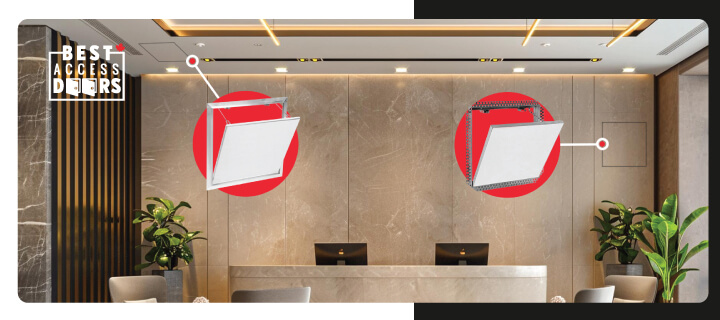
The top five hidden access panels that don’t compromise service or style in 2026 Canadian builds are those that integrate seamlessly with architectural finishes while still allowing reliable, repeatable access to building services.
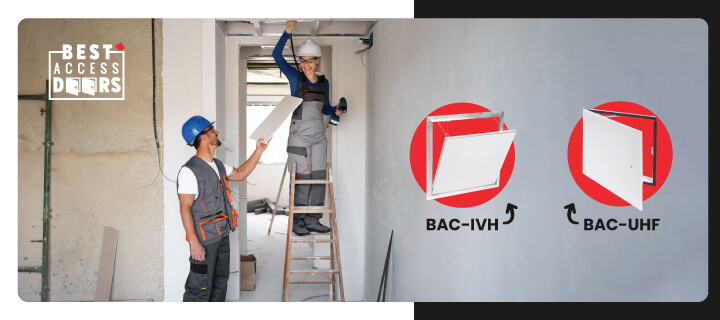
When it comes to concealed access in commercial interior construction, several products stand out for their balance of aesthetics, performance, and serviceability, including the BAC-IVH, BAC-IVHDF, BAC-IVHFH, BAC-TLDF, and BAC-UHF access panel. Each option addresses different access requirements, finish conditions, and installation sequences commonly found in Canadian commercial projects.
In this article, we’ll discuss why hidden access panels are increasingly specified across Canada and how each of these BAC models differs by application.
Which Hidden Access Panel Solutions Support Style and Service in Canadian Builds in 2026?
1. BAC-IVH Invisa Hatch Drywall Inlay with Fully Detachable
The BAC-IVH Invisa Hatch Drywall Inlay with Fully Detachable offers nearly invisible access to non-rated walls and ceilings while maintaining full serviceability. Its flush drywall inlay design allows the panel to blend seamlessly into architectural design, making it ideal for modern commercial interiors.
The BAC-IVH access panel also features a lightweight, high-grade aluminum construction that simplifies installation using basic tools. Its pressure-assisted push-to-latch mechanism provides key- and tool-free access, with multiple lock and latch options available.
2. BAC-IVHDF Invisa Hatch Drywall Inlay with Mud-In Flange
The BAC-IVHDF Invisa Hatch Drywall Inlay with Mud-In Flange is designed for projects where a flawless finish is essential. This concealed access panel allows quick, effortless access to utilities using a push-to-latch mechanism, while remaining virtually undetectable once finished.
This makes the BAC-IVHDF access panel suitable for new drywall installations and existing drywall assemblies where a clean, continuous surface is required. Its removable door allows easy access in confined areas.
3. BAC-IVHFH Invisa Hatch™ Drywall Inlay Access Panel with Fixed Hinges
Designed to provide discreet yet reliable access where frequent servicing is needed, the BAC-IVHFH Invisa Hatch™ Drywall Inlay Access Panel with Fixed Hinges blends seamlessly into wall surfaces while maintaining consistent alignment through its fixed hinge system.
Its touch-latch operation allows easy access without compromising the surrounding finish, making it suitable for mechanical, electrical, and service areas within commercial interiors. Custom sizing options ensure the BAC-IVHFH access panel can be tailored to unique design conditions.
4. BAC-TLDF Concealed Touch Latch Aesthetic Door with Mud-In Flange
The BAC-TLDF Concealed Touch Latch Aesthetic Door with Mud-In Flange is designed for non-rated drywall surfaces that need a clean, modern finish. This flush access door allows tool-free access through a concealed push-to-open latch, eliminating visible hardware.
Its detachable panel door provides unobstructed access to internal components, while the integrated mud-in flange simplifies finishing and ensures a precise, seamless perimeter. This makes the BAC-TLDF access door well-suited for commercial and industrial interiors that prioritize aesthetics and functionality.
5. BAC-UHF Aesthetic Access Panel with Hidden Flange
The BAC-UHF Aesthetic Access Panel with Hidden Flange is a versatile solution for a wide range of non-rated drywall and masonry applications. Its concealed flange design allows the panel to sit flush without the need for mudding or plastering, reducing installation time while maintaining an architectural finish.
Constructed from durable cold-rolled steel, the BAC-UHF access panel offers moisture and corrosion resistance and features a pantograph hinge for controlled opening and closing. It is ideal for projects that require efficiency without sacrificing visual quality.
Ready to experience the best of these products? Request a quote, and we will review each option with you.
How Do BAC-IVH, BAC-IVHDF, BAC-IVHFH, BAC-TLDF, and BAC-UHF Differ by Application?
Each of these differs by application because each model is engineered to meet specific fire-rating, finish, and access requirements within commercial wall and ceiling assemblies.
- For non-rated spaces, the BAC-IVH is specified where concealed access and seamless finishes are the priority. Its drywall-inlay design allows it to blend cleanly into surrounding surfaces.
- When fire-rated drywall assemblies are required, the BAC-IVHDF provides concealed access while maintaining the integrity of the rated wall or ceiling. This makes it suitable for healthcare, education, and institutional environments.
- In areas with higher demands, the BAC-IVHFH is used to meet enhanced code requirements. It is commonly installed in mechanical rooms, service corridors, and other critical spaces.
- Designed for mixed finishes, the BAC-TLDF supports both tile and drywall applications while maintaining fire-rated performance. It is often specified in washrooms and commercial kitchens.
- To accommodate varying assembly conditions, the BAC-UHF offers a universal hidden access solution. Its flexibility makes it well-suited for large commercial projects requiring consistent concealed access.
Why Are Hidden Access Panels Increasingly Specified in Canadian Commercial Builds?
Hidden access panels in Canada are being specified in commercial builds because many architects and owners require full-service access while maintaining clean interiors and strict performance compliance.
Canadian commercial projects place strong emphasis on aesthetics, energy efficiency, and long-term durability. As building systems become more complex and tightly integrated, the need for access has increased, but visible access doors can conflict with architectural intent. Hidden access panels solve this issue by allowing access doors and panels to blend seamlessly into wall and ceiling finishes, but visible access doors can conflict with architectural intent.
How Do Concealed Access Panels Maintain Serviceability Without Visible Disruption?
Concealed access doors for commercial projects maintain serviceability without visible disruption because they provide full system access while remaining flush, paintable, or finish-integrated with surrounding surfaces.
Unlike traditional surface-mounted access doors, concealed access panels are designed to disappear into commercial drywall systems. They enable maintenance personnel to access valves, controls, and MEP components without visually disrupting walls or ceilings.
Related: 3 Clever and Innovative Ways to Conceal Your Access Panels
Which Performance Factors Matter Most When Selecting Hidden Access Panels?
The most important performance factors when selecting hidden access panels are fire resistance, structural integrity, finish compatibility, and long-term durability.
In Canadian commercial construction, hidden access panels must often meet fire-rated requirements, acoustic expectations, and environmental conditions. Fire-rated drywall access panels are critical where assemblies must maintain a tested fire-resistance rating. Panels must also align with commercial drywall systems to prevent air leakage, cracking, or finish failure over time.
When Should Hidden Access Panels Be Coordinated to Avoid Finish Damage and Rework?
Hidden access panels should be coordinated during the design and MEP coordination phase, as late placement can lead to finish damage, misalignment, and costly rework.
Hidden access panels must align precisely with system locations, drywall framing, and finish schedules. Coordinating them early allows custom access panel layouts to be integrated into shop drawings and construction documents. This prevents last-minute wall cuts that damage drywall, paint, tile, or specialty finishes.
For design-driven projects that also require reliable performance, contact us today and speak with our team about custom solutions. And as project scopes expand or repeat, having a trusted support network is essential. Join our Pro Club Program that’s designed to provide ongoing value through priority assistance and exclusive resources.
Frequently Asked Questions on Hidden Access Panels
1. Do hidden or flush access panels allow repeated access without damaging finishes?
High-quality hidden access panels are designed to allow repeated opening and closing without cracking drywall edges or disturbing painted surfaces. This is why flush access panels in Canada are engineered with rigid frames and concealed hardware to maintain a clean finish throughout the building's lifespan.
2. When should hidden access panels be coordinated during a project?
Hidden access panels should be coordinated during early design and before drywall installation to ensure proper framing and clean finishing.
3. How do hidden access panels support lifecycle maintenance?
Hidden access panels provide reliable access points, reducing the need for destructive wall or ceiling removal during maintenance.
4. What finishes can be applied to hidden access panels?
Hidden access panels can be painted, tiled, or finished to match the surrounding wall or ceiling surfaces.
To Sum It Up
In 2026 Canadian builds, selecting the top five hidden access panels that don’t compromise service or style for your project means choosing solutions that integrate seamlessly with architectural finishes while still providing dependable access to building systems.
At Best Access Doors Canada, we ensure that our concealed access panels are engineered to meet the demands of modern Canadian construction by balancing aesthetics, durability, and serviceability. Our product range is designed to support architects, contractors, and facility managers with access solutions that perform reliably without disrupting design intent.
Call us at +1 888 327 5471 for expert guidance on selecting the right hidden access panel for your project.