





How Do You Choose Cold-Weather Access Panels That Pass Canadian Codes and Keep Heat In? Posted by Best Access Doors Canada on 15th Dec 2025
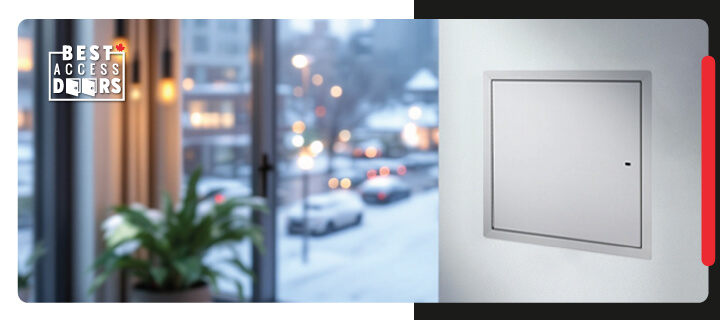
Choosing cold-weather access panels that meet Canadian codes and retain heat starts with selecting models designed for high insulation performance, airtight sealing, and verified code compliance. When temperatures drop, the right access panel becomes essential for preventing heat loss and maintaining energy efficiency.
One model that meets these demands is the BAC-FRU Fire-Rated Insulated Panel Upward Opening, which offers strong thermal efficiency while satisfying fire-resistance requirements across Canada.
In this article, we’ll discuss the key features that make an access panel suitable for cold-weather conditions and why the BAC-FRU is a dependable choice for efficiency and compliance.
What Makes Cold-Weather Access Panels Different From Standard Models?
Cold-weather access panels differ from standard models by offering added insulation, airtight sealing, and durable exterior-grade construction, all of which help prevent heat loss and withstand freezing temperatures.
Insulated Panels With Higher R-values
Cold-weather models typically feature rigid insulation, often polyisocyanurate or mineral wool, to minimize heat transfer through the door. This helps maintain interior warmth and limits thermal bridging in exterior walls or unconditioned areas.
Airtight Perimeter Gaskets
Continuous gaskets around the frame create a tight seal when the door closes. This maintains the air barrier, reduces drafts, and prevents warm, moist air from escaping into cold spaces where condensation could form.
Exterior-Grade Metals and Durable Finishes
Galvanized or stainless-steel construction, supported by corrosion-resistant coatings, enables the panel to withstand moisture, wind exposure, and repeated freeze–thaw cycles that standard interior doors cannot tolerate.
Verified Performance for Cold Climates
Cold-weather panels are tested for air leakage, water resistance, and thermal performance, ensuring they can be installed directly in the building envelope without compromising energy efficiency.
Need cold-weather access panels with specific features? We provide custom access solutions designed for insulation, airtight performance, and durability in extreme winter conditions. Contact us to find the right panel for your project.
How Do Airtight and Insulated Panels Support Canadian Energy Code Compliance?
Airtight and insulated access panels help Canadian buildings meet energy codes by maintaining continuous insulation and preserving the thermal performance of the building envelope. In cold climates, these panels ensure that the assembly retains its designed R-value, minimizes heat loss, and remains compliant with NECB and provincial energy requirements.
Airtightness for NECB & IECC Alignment
Both the National Energy Code of Canada for Buildings (NECB) and International Energy Conservation Code (IECC) require reduced infiltration rates and encourage verification through blower-door testing. Airtight access panels prevent the door cavity from becoming a pathway for leaks.
Cold-rated gaskets, reinforced frames, and precise manufacturing tolerances allow the panel to maintain seal compression even in subzero conditions, keeping the envelope compliant under pressure testing.
Insulation Ratings That Match the Assembly
Energy codes specify minimum effective insulation requirements, meaning the overall assembly must achieve its designed thermal performance even with penetrations. An insulated access door with a defined R-value/insulation rating reduces thermal bridging and helps the wall or ceiling meet its effective R-value targets.
Without proper insulation, the surrounding assembly must compensate, resulting in increased cost and complexity.
Reducing Mechanical Load and Heat Loss
High-performance access doors limit heat transfer across the envelope, reducing winter heating demand, and improving energy efficiency. For projects aiming for strict energy-efficiency standards, airtight, insulated access doors for cold climates ensure the building envelope performs as designed year-round.
Related post: Why Insulated Access Panels Are Essential for Canada’s Cold Climate?
Why Is Controlling Air Leakage So Important in Cold Climates?
Controlling air leakage in cold climates is important for maintaining thermal comfort, preventing moisture damage, and ensuring energy efficiency. Even minor leaks can compromise the building envelope, creating a cascade of performance issues.
1. Moisture Accumulation and Condensation Risk
When warm indoor air enters cold exterior cavities, it can reach surfaces below the dew point, causing condensation. Over time, this moisture can damage insulation, corrode metal components, or saturate gypsum, weakening the overall assembly.
2. Reduced Energy Efficiency
Air leakage is a major source of heat loss in winter. Infiltration forces heating systems to work harder to maintain indoor temperatures. Well-sealed panels help retain conditioned air, lowering energy consumption and supporting energy-efficient building performance.
3. Pressure Imbalances
Uncontrolled air movement can alter interior pressure relationships, creating drafts or trapped moisture. Panels designed for tight air sealing stabilize pressure, ensuring the building envelope functions as intended.
4. Enhanced Comfort
Air leaks can cause cold drafts, uneven temperatures, and uncomfortable interior conditions. Energy-efficient access doors contribute to consistent indoor comfort by preventing cold spots and minimizing temperature swings.
5. Longevity of Building Materials
Repeated exposure to uncontrolled airflow and condensation accelerates the degradation of materials. Properly sealed and insulated access panels extend the lifespan of surrounding insulation, finishes, and structural components, reducing maintenance costs over time.
Which Features Help Access Panels Withstand Extreme Canadian Winters?
When evaluating cold-weather access panels in Canada, many builders consider these essential features:
- High-Performance Insulation: Look for polystyrene, mineral wool, or specialized insulating cores with published R-values appropriate for the climate zone. Higher insulation performance reduces heat loss and limits condensation.
- Continuous Gaskets: Durable neoprene or EPDM gaskets must remain flexible and airtight in subzero temperatures. Continuous perimeter gasketing is significantly more effective than spot seals.
- Corrosion-Resistant Materials: Galvanneal or stainless steel is recommended where humidity, frost, or exterior exposure is present. Powder-coat finishes add another layer of winter durability.
- Durable Hardware: Locks, hinges, and latches should operate smoothly even when exposed to thermal contraction and expansion. Hardware failures often appear first in winter, so spec winter-rated components where possible.
- Sealed Frame and Tight Tolerances: Precision-engineered frames minimize air gaps, helping to maintain air barrier continuity, which is especially important for compliance and blower-door-tested projects.
What Models Are Recommended for Cold-Weather Builds?
Best Access Doors Canada offers a range of insulated and airtight models specifically designed for cold-weather builds. These products ensure reliable thermal performance, air-sealing, and durability, while complying with fire, building, and energy codes. The following models are commonly specified for projects in Canadian climate zones:
BAC-FRU Fire-Rated Insulated Panel Upward Opening
The BAC-FRU Fire-Rated Insulated Panel Upward Opening is a ceiling-mounted, upward-opening fire-rated panel designed for spaces where conventional downward-opening doors are impractical.
- Upward-Opening, Space-Saving Design: The door swings upward on a continuous piano hinge that extends beyond standard hinges, allowing full access in confined ceiling spaces.
- Thermal Performance: With 2" of mineral wool insulation, the BAC-FRU reduces heat transfer and supports energy efficiency, helping maintain interior comfort even in extreme cold.
- Durable and Corrosion-Resistant: Constructed of cold-rolled and galvanneal steel, this panel withstands the rigours of demanding installations while resisting rust and wear.
- Fire Efficiency: The 2-hour fire rating and NFPA 80-compliant self-latching mechanism ensure that code requirements are met.
- Sustainability: Made from responsibly sourced materials, this panel can contribute to LEED v4 credits for environmentally conscious projects.
BAC-PAL Insulated Aluminum Access Door
For wall or ceiling installations where large openings, corrosion resistance, and sound control are important, the BAC-PAL Insulated Aluminum Access Door delivers reliable performance. Its combination of lightweight aluminum construction, insulation, and airtight gasketing makes it a versatile choice for harsh environments.
Specifications and Advantages:
- Material & Finish: Its 0.064" aluminum with DuPont powder coat finish ensures durability, corrosion resistance, and an attractive appearance.
- Thermal and Acoustic Insulation: The 1" fibreglass insulation combined with a neoprene perimeter gasket reduces heat loss, air infiltration, and sound transmission.
- Continuous Piano Hinge: It provides smooth operation and long-term reliability for frequent use.
- Secure Access: Equipped with a cylinder lock and key for controlled entry, this panel helps ensure security.
Request a quote today for accurate pricing and expert guidance for these models. We will help you review the options, select the right features, and ensure your project gets the most suitable solution.
Frequently Asked Questions on Fire-Rated Access Panels
1. What is the purpose of a fire access panel?
A fire access panel is designed to maintain the fire-resistance rating of walls, ceilings, or partitions while providing access to hidden spaces, such as mechanical, electrical, or plumbing systems.
2. What is the NFPA code for fire access panels?
The applicable standard is NFPA 80 – Standard for Fire Doors and Other Opening Protectives. This code outlines the requirements for the installation, inspection, and maintenance of fire doors and access panels, including fire ratings, hardware, and self-latching mechanisms, to ensure proper performance during a fire event.
3. Does a fire-rated access door need to be insulated?
Not necessarily, but insulation is often recommended. Fire-rated doors are primarily designed to delay the spread of fire and maintain structural integrity for a specific duration. Adding insulation reduces heat transfer, enhances energy efficiency, and prevents condensation. In cold climates or exterior wall applications.
To Sum It Up
Selecting access panels for cold-weather construction involves more than just durability. You need options that meet Canadian codes while also improving energy efficiency, which is why insulated, airtight panels are preferred for reducing heat loss and maintaining steady performance in winter.
Best Access Doors Canada understands these needs and provides fire-rated, insulated, and durable access panels made to withstand cold, moisture, and frequent use. Our specialists can help you select the right model for walls, ceilings, or mechanical spaces, ensuring thermal performance.
Contact us at +1-888-327-5471 for guidance and expert assistance in selecting the ideal access panels for your project.