




How to Achieve LEED v5 Energy Credits on Your Next Project Posted by Best Access Doors Canada on 7th Apr 2026
To achieve LEED v5 energy credits on your projects, you need consistent and measurable performance across the entire building, especially on the envelope. This means treating small details, like access doors, as part of your thermal and fire-rated assemblies.
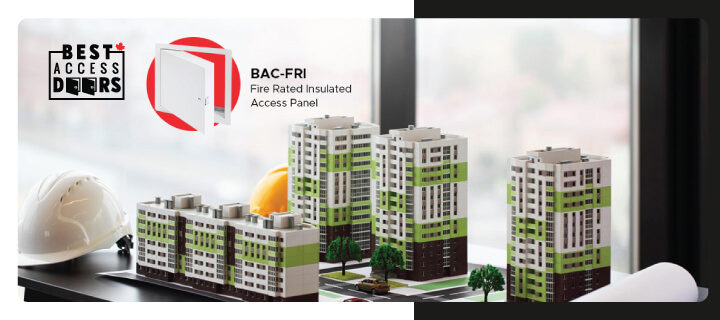
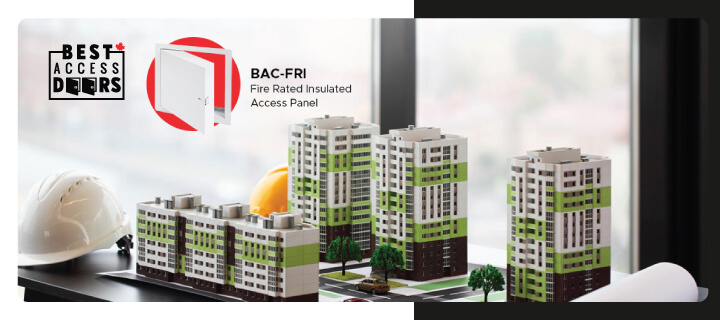
Selecting fire-rated access panels, such as the BAC-FRI Fire-Rated Insulated Access Door, and coordinating them early with your energy model, envelope details, and LEED documentation helps you maintain building envelope continuity and avoid performance gaps.
In this article, we’ll look at how LEED v5 is changing energy strategies in Canada, why access panels matter for envelope performance, when to evaluate them in the LEED process, and how BAC-FRI access panels support high-performance commercial projects.
What Changes in LEED v5 Impact Commercial Building Energy Strategies?
LEED v5 impacts energy strategies for commercial buildings by placing greater emphasis on actual performance (how much energy a building uses and how much carbon it produces) rather than simply checking off prescriptive requirements.
For Canadian projects, three changes are particularly important for your energy strategy:
More Points for Measured Performance
LEED v5 awards most of its points for outcomes you can measure, not just initiatives you plan on paper. In the second public comment draft, roughly 80% of points were tied to measurable performance and only 20% to strategies, reinforcing the need for accurate modelling and ongoing performance data.
For your team, this means energy credits now depend on whether the finished building behaves as the model predicts, not just on what you specified.
Stronger Focus on Low-Carbon and Near-Zero Buildings
The overarching goal of LEED v5 is to help buildings move toward near-zero operational carbon by 2050.
In Canada, these lines up with national goals for net-zero energy-ready codes by 2030, supported by updates to the National Building Code of Canada (NBC) and the National Energy Code of Canada for Buildings (NECB).
Closer Alignment with Canadian Codes and Envelope Performance
LEED v5 aligns more closely with newer Canadian energy code requirements, especially around the building envelope. For example:
- NECB 2020 tightens allowable U-values for walls, roofs, and other opaque assemblies. It introduces options for whole-building airtightness testing, which makes every penetration in the envelope, including access panels, more important.
- The Canada Green Building Council now allows Canadian projects to register directly under LEED v5, confirming it as the current path forward for LEED-aligned commercial construction projects in Canada.
Related: How To Save Energy and Earn LEED Credits on Your Next Commercial Build
Why Do Access Panels Matter in Energy Modeling and Envelope Continuity?
Access panels matter in energy modeling and envelope continuity because each opening in a wall or ceiling can weaken the air barrier continuity, reduce local R-values, and disrupt fire-rated separation if it isn’t detailed correctly.
When it comes to energy performance, access panels can affect your results in three ways:
- Air leakage and infiltration control: Research shows that air leakage can account for approximately 25-40% of cooling and heating energy use in residential buildings, making airtight envelopes one of the most effective ways to reduce operational energy use
- Thermal bridging and local R-value losses: A poorly insulated door in an otherwise high-performing wall acts as a heat transfer point, which undermines the assembly’s effective R-value and creates cold spots.
- Fire-rated assemblies and separation: Fire-rated walls and ceilings that also form part of the thermal envelope often carry both life-safety and energy responsibilities. If you introduce a non-rated or uninsulated panel into a rated partition, you can compromise both the fire separation and the energy strategy.
Check out our fire-rated access doors to learn how code-ready access panels can support your LEED v5 energy strategies in Canadian commercial projects.
Also, if you often manage multi-phase commercial builds or coordinate energy-focused access solutions, consider joining our Pro Club to get perks like priority customer support and expedited order processing.
When Should Access Panels Be Evaluated During LEED v5 Project Planning?
Access panels should be evaluated as early as schematic design and refined through design development and preconstruction.
A practical LEED v5 planning sequence would involve the following steps:
Schematic Design and Concept Energy Modeling
As you define envelope types and preliminary U-values, identify where you’ll need regular access. For example, mechanical and electrical rooms, risers, shafts, stairwells, and ceiling plenums.
At this stage, you don’t need final sizes, but you should confirm that fire-rated access panels will be used wherever a rated, insulated assembly is penetrated. This keeps early energy modeling assumptions realistic.
Design Development and Code Alignment
When you’re refining wall and ceiling build-ups for NECB or provincial step codes, include access panels in the envelope schedule with clear notes on:
- Fire resistance rating to match the assembly.
- Insulation type and thickness.
- Expected airtightness and detailing requirements around the frame.
This is also the point to confirm that your access solutions will not conflict with building envelope continuity objectives or LEED v5 credit strategies.
Construction Documents and Specification Stage
In the Division 08 section, call out energy-efficient access doors with specific performance attributes, such as insulated cores, steel construction, and compatibility with fire-rated and non-rated assemblies.
Align the specifications with the details shown in wall sections, shaft details, and reflected ceiling plans to avoid conflicts between what’s drawn and what’s supplied.
Preconstruction and Submittal Review
During submittal review, verify that the selected access doors meet the intended performance requirements: fire rating, insulation, finish, and hardware.
Also, confirm with your energy modeler whether the number and type of access doors have any material impact on airtightness or thermal performance in the final model, especially in cold climates where small envelope weaknesses can add up fast.
How Does BAC-FRI Fit into High-Performance Canadian Commercial Builds?
The BAC-FRI Fire-Rated Insulated Access Door fits well in high-performance buildings since it combines a 2-hour fire-resistance rating with mineral wool insulation, durable steel construction, and LEED-aligned material attributes.
Key features that make the BAC-FRI access panel align with sustainable commercial construction goals in Canada include:
Fire-rated, insulated construction for rated assemblies
- BAC-FRI is designed for walls and ceilings and provides fire resistance for up to 2 hours, certified to U.L. standards.
- It includes 2" thick mineral wool insulation, which helps the access door align with the surrounding assembly’s thermal envelope performance.
Note: Fire-rated access doors don’t stop fires from starting; they help slow down the spread of a fire for a limited period.
Durable, code-ready materials and hardware
- A 16-gauge cold-rolled steel frame and a 20-gauge galvanneal steel door to provide robust, long-term performance in commercial environments.
- A continuous piano hinge to support smooth operation while maintaining alignment with the frame.
- Self-closing and self-latching hardware with a tool-key operated slam latch and/or ring-operated slam latch that complies with NFPA 80 requirements.
Support for finish quality and integration
- An exposed flange that simplifies installation and allows the panel to sit cleanly within drywall or other finishes.
- A high-quality white powder coat primer that comes ready for texturing, wallpaper, or paint, so you can blend access points into finished interiors without sacrificing performance.
Options for different applications and environments
- Hardware upgrades: mortise deadbolt lock, hex-head slam latch, handle-operated slam latch, or mortise prep for a cylinder (cylinder optional) for different levels of controlled access.
- Material upgrades: stainless steel with a #4 brushed finish for corrosion resistance or a more refined appearance.
Alignment with LEED materials and documentation needs
- BAC-FRI is manufactured through an environmentally conscious process and uses mineral wool insulation with 70% recycled content. This supports sustainability documentation under LEED v4 and helps position your project well for LEED v5’s focus on carbon and lifecycle impacts.
Ready to align your access panels with your LEED v5 energy objectives? Request a quote for BAC-FRI to coordinate sizes, options, and lead times with our team.
FAQs on Fire-Rated and Insulated Access Panels
1. How can fire-rated and insulated access panels support LEED-aligned goals?
Fire-rated and insulated access panels can support LEED-aligned goals by helping you maintain your envelope’s fire rating, insulation, and airtightness at critical service points.
2. Where should I use fire-rated and insulated access panels instead of standard panels?
You should use fire-rated access panels wherever an access point falls within a fire-rated wall or ceiling assembly. In these locations, a standard uninsulated panel can disrupt the continuity of the insulated assembly.
3. How do access panels affect blower door or whole-building airtightness tests?
Access panels can affect blower door and whole-building airtightness tests if they’re not detailed and installed with the air barrier in mind. Gaps around the frame, unsealed joints, or warped doors can all contribute to higher air leakage rates.
To Sum It Up
Achieving LEED v5 energy credits in Canadian commercial projects now depends more on measurable performance, especially for the building envelope. As NECB and provincial codes tighten, small envelope details like access doors can make the difference between meeting your targets and falling short.
If you’re planning a commercial project in Canada with sustainability goals in mind and want to ensure access points support your LEED v5 objectives, our team can help you review locations, sizes, and access panel options across your project.
Contact us or call +1-888-327-5471 to coordinate fire-rated access panels for your next LEED-focused commercial project.